
Chiropractic Care in Charlotte, NC
Chiropractic Care
– More Than Just Symptom Relief
Chiropractic care is based on a simple principle: your brain and body rely on clear communication to regulate movement, healing, recovery, and daily function. That communication travels through the nervous system, which is protected by the spine.
When the spine is moving and functioning well, the nervous system can do its job with less interference. When a spinal segment is not functioning properly, it can affect how the nervous system coordinates muscles, posture, movement, and balance. Over time, that can lead to compensation patterns that show up as stiffness, tension, postural strain, recurring discomfort, and pain.
At Align Chiropractic, we focus on identifying areas of subluxation and joint dysfunction, then restoring healthier motion and function so your body can regulate, adapt, and recover more effectively.
Our office has a strong focus on upper cervical chiropractic, because of the close relationship between the upper cervical spine, brainstem, spinal cord, and nervous system. But we also look at the full spine and how the body is functioning as a whole.
The Spine and Nervous System
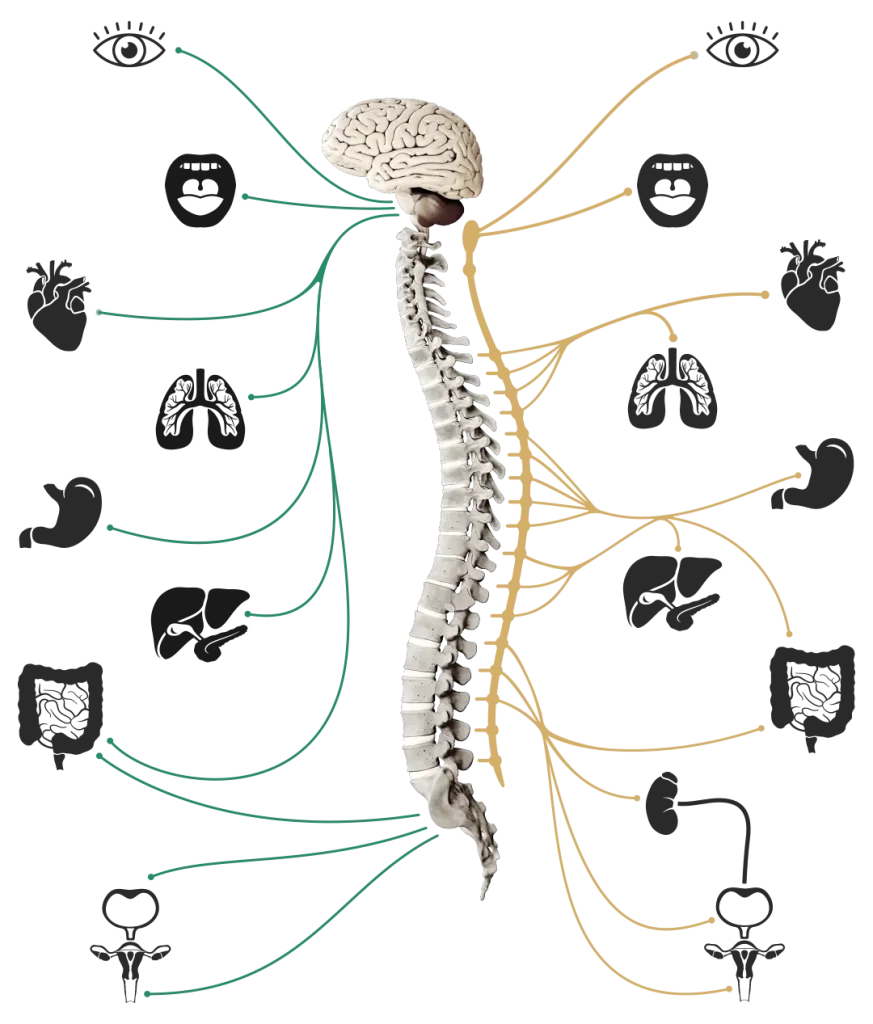
Your Body’s Control and Communication System
Every organ and system in your body is coordinated through the nervous system. Signals travel from the brain, down the spinal cord, and out through nerves that influence posture, movement, muscle tone, balance, recovery, and bodily function.
When spinal segments lose normal motion and function, often referred to in chiropractic as subluxation or joint dysfunction, the system can become stressed. This may contribute to muscle imbalance, restricted movement, nerve irritation, and recurring patterns of discomfort.
Many people notice this as back pain, neck pain, headaches, shoulder tension, hip tightness, sciatica, dizziness, or posture-related stiffness. But the broader goal of chiropractic care is to help the body function better overall, not just to quiet symptoms temporarily.
Subluxation and joint dysfunction are often influenced by a combination of stresses, including:
- Physical stress: posture strain, repetitive movement, sports, falls, injuries, long hours sitting, or auto accidents.
- Emotional stress: prolonged tension, poor sleep, mental overload, or ongoing stress that causes the body to stay guarded.
- Chemical stress: inflammation, nutritional deficiencies, medications, environmental exposures, or other factors that affect how the body responds and recovers.

Chiropractic Adjustments
Restoring Motion and Reducing Interference
A chiropractic adjustment is a specific, controlled correction applied to a joint that is not functioning as it should. The goal is to restore healthier joint motion, reduce stress on surrounding tissues, and support clearer communication between the brain and the body through the nervous system.
Some people notice improvement quickly. Others improve more gradually as the body adapts over a series of visits. Either way, the goal is the same: better function that holds, not just short-term relief.
One approach does not fit every person. At Align Chiropractic, your care is based on your history, exam findings, goals, comfort level, and how your body responds. Depending on what we find, care may include specific chiropractic adjustments, upper cervical care, full-spine care, neurological rehabilitation, stability exercises, or supportive therapies when appropriate.
Frequently Asked Questions
What conditions do you commonly help?
Many patients come in with back pain, neck pain, headaches, migraines, sciatica, shoulder and hip tightness, posture-related stiffness, dizziness, balance issues, TMJD, brain fog, or recurring flare-ups. We also see people after auto accidents and sports injuries. If you are not sure whether chiropractic care is right for your issue, the first step is a proper evaluation.
Does the adjustment hurt?
Most adjustments are not painful. Many people feel relief, better movement, or a sense of looseness afterward. If an area is very irritated, you may feel some tenderness during or after treatment, similar to soreness after exercise. We adapt care based on your comfort level and how your body responds.
Is it normal to feel sore after a visit?
Yes, sometimes. When joints and tissues start moving differently, temporary soreness can happen, especially early in care. This usually improves as your body adapts and stabilizes.
How many visits will I need?
It depends on your condition, your history, your goals, and how your body responds. Some people feel noticeable improvement within the first few visits. Others need more time, especially if the problem has been building for months or years. We recommend care case by case and re-evaluate progress along the way.
Do I need X-rays?
Not always. Imaging is recommended only when clinically appropriate. If you already have prior imaging, we will review it when available. In some cases, Align may use advanced imaging or motion studies to better understand what is happening before making care recommendations.
Can chiropractic help if my pain comes and goes?
Yes. Flare-ups often reflect an underlying movement, stress, or compensation pattern that has not fully resolved. The goal is not only to calm the flare-up, but to improve function so the same pattern is less likely to keep returning.
Is chiropractic safe?
For most people, chiropractic care is considered a safe, conservative option when performed appropriately. Your care starts with a consultation and exam so we can understand your health history, assess your spine and nervous system, and determine what type of care is appropriate for you.
Do you adjust children or pregnant patients?
Yes. Care is modified based on age, size, comfort level, and stage of pregnancy. For children, care is gentle and adapted to the child. During pregnancy, techniques and positioning are adapted to keep care comfortable and appropriate.